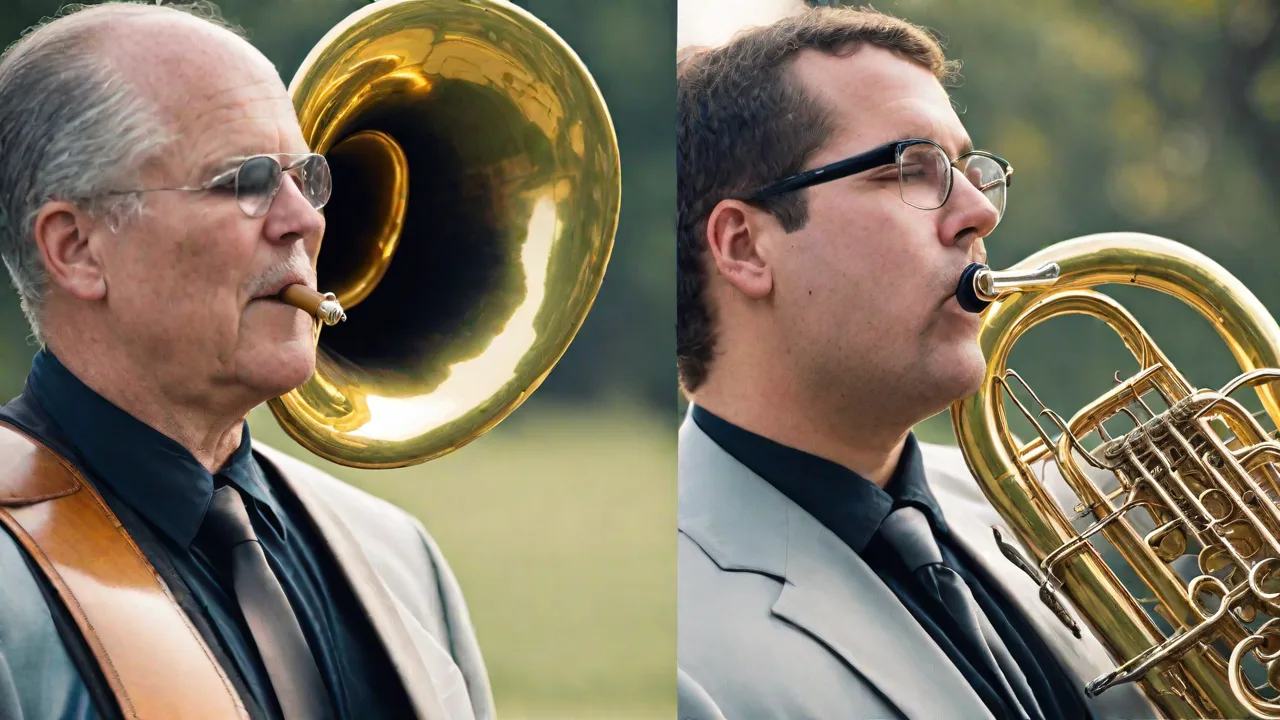
Exploring Different Playing Styles for Tuba and Sousaphone
The Foundation: Understanding Tuba and Sousaphone Mechanics
The tuba and sousaphone represent the backbone of the brass section, providing the harmonic and rhythmic foundation that anchors ensembles across virtually every musical genre. While the tuba reigns in orchestral and concert settings, the sousaphone, with its distinctive circular wrap and forward-facing bell, was engineered specifically for mobility and projection in marching environments. Understanding the mechanical and acoustic differences between these instruments is the first step toward developing a versatile playing style that adapts to any musical demand.
The tuba typically features a larger bore and a more conical taper, producing a broader, more diffuse sound that blends seamlessly into orchestral textures. The sousaphone, by contrast, uses a narrower bore in relation to its length, which concentrates the sound and directs it outward with greater intensity. These design differences are not merely cosmetic; they fundamentally shape how a player must approach breath support, embouchure tension, and articulation for each instrument.
Both instruments share the same fundamental pitch range and fingering system, but the physical demands differ considerably. A concert tubist may sit for hours with the instrument resting on the chair or a stand, while a sousaphone player supports the entire weight of the instrument on their shoulders, often while marching for extended periods. This difference alone dictates distinct approaches to posture, breathing mechanics, and endurance building.
Breath Support and Embouchure Precision
Every playing style, regardless of genre, begins with mastery of breath control and embouchure formation. The tuba and sousaphone require massive volumes of air to produce a full, resonant tone. Shallow, clavicular breathing will result in a thin, strained sound that lacks projection and tonal depth. Diaphragmatic breathing, where the abdomen expands downward and outward during inhalation, is non-negotiable for producing the sustained, powerful lines these instruments demand.
Embouchure formation for low brass involves a firm but relaxed aperture through which the lips vibrate freely. The mouthpiece placement should be centered, with approximately two-thirds of the upper lip and one-third of the lower lip inside the rim. This ratio can vary slightly depending on the player's dental structure and the specific demands of the style, but maintaining a consistent, efficient vibration is critical.
Daily practice of long tones, breath attacks, and lip slurs builds the muscle memory and stamina necessary for reliable performance. Players should practice breathing exercises away from the instrument as well, using a breathing tube or simply focusing on deep, slow inhalations followed by controlled, steady exhalations. These fundamentals underpin every style discussed in this article and should never be neglected, regardless of the player's experience level.
Classical Orchestral Style
The classical tuba style is rooted in the German and Viennese traditions of the 19th and 20th centuries, where the instrument was prized for its warm, centered tone and its ability to blend with the bassoon, trombone, and string bass. Orchestral tubists are expected to produce a sound that is round, dark, and evenly balanced across all registers, with minimal vibrato except where stylistically appropriate.
Articulation in the classical style demands precision and clarity. Attacks are clean and definite, with tonguing that ranges from delicate legato touches to crisp staccato punctuations. The orchestral tubist must navigate complex rhythmic passages, sudden dynamic shifts, and extended lyrical solos with equal facility. Repertoire such as the tuba parts in Gustav Mahler's symphonies, Richard Wagner's operas, and John Williams' film scores requires exceptional control and interpretive sensitivity.
A key skill in this style is the ability to read multiple clefs fluently. While bass clef is standard, orchestral tuba parts frequently use tenor clef for higher passages, and some advanced repertoire employs treble clef transposition. Sight-reading in all clefs should be a regular part of practice for any player pursuing orchestral work.
Classical tubists should also develop a refined sense of phrasing, shaping melodic lines with subtle dynamic contours that mimic the human voice. Long tones played with gradual crescendos and diminuendos, combined with slurred intervals and register leaps, build the flexibility and control needed for this demanding style.
Recommended Classical Repertoire for Study
- Ralph Vaughan Williams: Tuba Concerto in F minor
- John Williams: Tuba parts in Star Wars and Jurassic Park scores
- Gustav Mahler: Symphony No. 1 (third movement, tuba solo)
- Richard Wagner: Overture to Die Meistersinger
- Paul Hindemith: Sonata for Tuba and Piano
Studying these works provides a comprehensive understanding of the stylistic expectations, technical challenges, and tonal ideals of the classical idiom.
Marching Band and Sousaphone Style
The sousaphone style is defined by its context: outdoor performance, often while moving, in environments where acoustic projection competes with crowd noise and the volume of a full marching band. The primary goal is to produce a clear, articulate, and powerful bass line that drives the ensemble's rhythm and supports the harmonic structure from below.
Projection is achieved through a combination of focused embouchure, efficient breath support, and proper horn angle. The bell should be directed slightly upward and toward the audience, not buried against the shoulder. Many sousaphone players develop a brighter, more biting tone than their orchestral counterparts, as this timbre cuts through outdoor acoustics more effectively.
Breath management becomes a physical challenge during marching. The body is in motion, the instrument is heavy, and the player must often breathe rhythmically in time with the drill. Box breathing techniques, where inhalations, holds, and exhalations are counted in equal intervals, help develop the stamina needed for sustained playing during extended performances. Hydration and core strength training are also essential, as dehydration and fatigue degrade both tone quality and intonation.
Rhythmic precision is paramount in the marching style. Sousaphone players must lock in with the drumline, particularly the bass drums and snare, to create a unified rhythmic foundation. Metronome practice at a variety of tempos, especially above 160 beats per minute, prepares players for the faster, more repetitive passages common in marching repertoire. Articulation exercises focusing on single-tonguing, double-tonguing, and triple-tonguing at high speeds are indispensable.
Physical Conditioning for Marching Brass
- Core stability exercises such as planks and deadlifts improve posture while marching.
- Cardiovascular training, including running or cycling, enhances stamina for long performances.
- Neck and shoulder strengthening reduces fatigue from supporting the instrument's weight.
- Stretching routines for the hips, lower back, and shoulders prevent injury during drill movements.
The marching style demands a different mindset than classical playing. It is energetic, extroverted, and rhythmically aggressive. Players who master this style develop tremendous endurance, rhythmic authority, and the ability to perform reliably under physically demanding conditions.
Jazz and Contemporary Improvisation
The tuba has a rich but often overlooked history in jazz, dating back to the early New Orleans brass bands where it was used as a walking bass instrument before the string bass gained ascendance. In contemporary jazz, the tuba is valued for its weighty, resonant tone and its ability to produce bass lines with a distinct, articulate attack that cuts through the ensemble.
Jazz tuba style emphasizes rhythmic flexibility, harmonic sophistication, and melodic invention. The player must develop a strong sense of swing, which involves a careful manipulation of note placements, accents, and silences to create forward momentum. Ghost notes, smears, falls, and doits are all part of the jazz tubist's expressive vocabulary.
Improvisation is the central challenge of this style. Unlike classical playing, where the notes are prescribed, jazz requires the tubist to create spontaneous melodic lines that fit the harmonic progression while maintaining a compelling rhythmic feel. Transcribing solos from great jazz bassists and horn players, such as Ray Brown, Charles Mingus, and J.J. Johnson, helps internalize the language. Practicing scales, arpeggios, and chord patterns in all twelve keys is essential for navigating the rapid harmonic movements of jazz standards.
Essential Jazz Techniques for Tuba
- Walking bass lines with consistent quarter-note pulse and chromatic approach tones
- Syncopated accents that emphasize the offbeats and create rhythmic tension
- Mute techniques, including plunger and cup mutes, to alter timbre and add conversational effects
- Growling and flutter-tonguing to produce percussive, textural sounds
- Articulation variations: legato, staccato, and accents combined in rhythmic patterns
Jazz tuba is not limited to bass lines. Modern players such as Howard Johnson, Bob Stewart, and Marcus Rojas have demonstrated the instrument's capacity for virtuosic soloing, ensemble counterpoint, and avant-garde expression. Exploring their recordings and transcriptions can open new possibilities for any tubist interested in jazz and improvised music.
For players interested in the historical role of the tuba in early jazz, resources such as the Library of Congress collection on New Orleans brass bands provide invaluable documentation and recordings that showcase the instrument's foundational role in the genre.
Popular Music and Commercial Styles
In popular music genres such as funk, soul, Latin, and rock, the tuba and sousaphone appear less frequently than in classical or jazz, but their impact when used is unmistakable. The tuba's deep, punchy tone provides a rhythmic and harmonic anchor that cuts through electric instruments and amplified vocals.
Commercial playing demands exceptional timekeeping, stylistic flexibility, and the ability to adapt to a wide range of feels, from the tight syncopation of funk to the relaxed groove of reggae. Articulation in popular music is generally more percussive than in classical playing, with short, punctuated notes and pronounced accents on beats one and three in duple meters.
Sight-reading efficiency is critical in studio and session work. Commercial parts are often notated with minimal rehearsal time, and the tubist must deliver a polished take quickly. Practicing with a metronome and reading unfamiliar charts regularly prepares players for the demands of professional studio environments.
Players in this genre should also be comfortable with amplification. Many commercial settings require the tuba to be miked or run through a direct input box. Understanding microphone placement, EQ settings, and signal chain basics helps ensure that the instrument's sound is captured and reproduced accurately in live and recorded contexts.
Experimental and Extended Techniques
Contemporary classical music and avant-garde composition have pushed the tuba and sousaphone far beyond their traditional roles. Composers such as Luciano Berio, John Cage, and Sofia Gubaidulina have written works that demand extended techniques, reimagining the instrument as a source of unconventional sounds and textures.
Multiphonics involve singing or humming into the mouthpiece while playing, producing two or more pitches simultaneously. This technique requires careful control of both the vocal cords and the embouchure, and it can produce eerie, organ-like harmonies or dissonant clusters depending on the intervals chosen. Practicing multiphonics begins with simple drone notes and gradually incorporates more complex vocal lines.
Flutter-tonguing, achieved by rolling the tongue as in a Spanish rr sound while blowing, creates a percussive, buzzing articulation that adds dramatic texture. Valve manipulation, such as half-valving or rapidly alternating valves, can produce glissandos, microtones, and metallic timbres. Mutes designed for brass instruments, including plunger, straight, and cup mutes, can also be adapted for tuba to further expand the sonic palette.
Practical Exercises for Extended Techniques
- Practice multiphonics by sustaining a pedal tone and humming a major second above the played pitch. Gradually increase the interval to a third, fourth, and fifth.
- Develop flutter-tonguing by practicing scales and arpeggios with full flutter on every note, starting slowly and increasing tempo.
- Experiment with half-valving by depressing a valve only partially while sustaining a tone, listening for the resulting pitch bends and timbral changes.
- Use a plunger mute to practice articulating rhythms and pitches with the bell covered and uncovered, mimicking the classic wa-wa effect.
These techniques require patience and systematic practice, but they open up entirely new dimensions of expression for the adventurous player. Resources for further exploration include YMusicTuba.com, which offers video demonstrations and written exercises for tuba-specific extended techniques.
Equipment Choices and Their Influence on Style
Mouthpiece selection, instrument bore size, and bell material all significantly affect the tonal characteristics and playability of the tuba and sousaphone. Players should choose equipment that complements their preferred style while maintaining versatility for other contexts.
For classical orchestral playing, a larger, deeper mouthpiece with a wide throat produces the dark, full tone that the repertoire demands. Marching sousaphone players often prefer a shallower cup with a sharper rim, which facilitates the brighter, more penetrating sound needed for outdoor projection. Jazz and commercial players may favor a mouthpiece with moderate depth and a narrow throat, balancing flexibility with a focused core sound.
The instrument itself also matters. A CC tuba is standard in American orchestras, while BBb and Eb tubas are common in brass bands and educational settings. Sousaphones are almost exclusively made in BBb, but variations in bell diameter and wrap configuration affect weight distribution and sound projection. Testing multiple mouthpieces and instruments in the actual performance context is the best way to make informed decisions.
For a comprehensive overview of equipment considerations and manufacturer specifications, musicians can consult the Band Director Community for detailed product reviews and player testimonials.
Developing a Personalized Practice Routine
No single playing style fits every musician. The most successful tuba and sousaphone players develop a personal synthesis of techniques drawn from multiple genres, informed by their unique strengths, interests, and performance goals. Building a daily practice routine that balances fundamentals, style-specific work, and creative exploration is essential.
Sample Balanced Practice Session
| Component | Duration | Focus |
|---|---|---|
| Warm-up and breathing | 10 minutes | Deep breaths, long tones, lip slurs |
| Technical fundamentals | 15 minutes | Scales, arpeggios, articulation exercises |
| Style-specific work | 20 minutes | Orchestral excerpts, marching drills, or jazz etudes |
| Repertoire practice | 20 minutes | Works on current performance pieces |
| Creative exploration | 10 minutes | Improvisation, extended techniques, or ear training |
This structure ensures consistent progress without neglecting any critical area. Players should adjust the proportions based on upcoming performances or specific goals, but the principle of balanced, focused practice remains constant.
Listening and Learning from the Masters
One of the most effective ways to absorb different playing styles is through focused listening. Studying recordings of master tubists across genres provides a template for tone production, phrasing, and rhythmic feel that written instructions can only approximate. Active listening, where the player follows along with a score or transcription and mentally analyzes articulations and dynamics, accelerates learning significantly.
Essential listening for classical style includes the recordings of Roger Bobo, Oystein Baadsvik, and Carol Jantsch. For marching and outdoor styles, the recordings of collegiate and professional marching bands, particularly the drum corps tradition, demonstrate the projection and precision required. In jazz, the work of Howard Johnson, Bob Stewart, and Matt Perrine showcases the instrument's improvisational potential. Contemporary and experimental players such as Jay Craven and Tom Pisek push the boundaries of what the instrument can do.
For a curated collection of tuba recordings spanning multiple genres, the International Tuba Euphonium Association maintains an extensive archive of resources, including recordings, transcriptions, and scholarly articles.
Performance Psychology and Stage Presence
Beyond technique and style, the mental aspect of performance separates competent players from compelling ones. Developing the confidence to project a personal musical voice requires deliberate mental preparation, including visualization, controlled breathing, and positive self-talk. Performance anxiety affects musicians at all levels, and strategies such as simulating performance conditions in practice, recording oneself regularly, and performing for small, supportive audiences help build resilience.
Stage presence also matters. Whether standing in a concert hall, marching across a football field, or improvising in a jazz club, how a player carries themselves communicates conviction and authority to the audience. Posture, eye contact, and physical engagement with the music enhance the listener's experience and reinforce the player's internal sense of control.
Integrating Multiple Styles into a Unified Voice
The most versatile tuba and sousaphone players are those who can move fluidly between styles while retaining a recognizable personal sound. This integration does not mean playing everything the same way; rather, it involves understanding the idiomatic conventions of each style and being able to adopt them at will, while infusing each performance with the player's unique tonal fingerprint.
Developing this versatility requires deliberate cross-training. A classical player should practice jazz etudes and attend jam sessions. A marching specialist should study orchestral excerpts and work on lyrical phrasing. A jazz player should explore contemporary classical repertoire and extended techniques. Each genre strengthens areas that others overlook, creating a more complete and resilient musician.
The journey toward stylistic integration is lifelong, but the rewards are substantial. Players who master multiple idioms find greater professional opportunities, deeper artistic satisfaction, and a more profound connection to the instrument and the music it makes possible.
Conclusion
The tuba and sousaphone are instruments of extraordinary range and expressive potential. From the refined, blended textures of orchestral performance to the high-energy projection of marching bands, from the spontaneous creativity of jazz to the boundary-pushing experimentation of contemporary music, these instruments offer a wealth of stylistic avenues for players to explore. Developing proficiency across multiple styles requires commitment to fundamentals, openness to new techniques, and a willingness to listen deeply to the masters of each tradition.
By approaching the instrument with curiosity, discipline, and a spirit of adventure, musicians can cultivate a personal playing style that honors the traditions while forging new paths. The bass voice of the brass section is not merely a foundation; it is a powerful, expressive force that shapes the character of every ensemble it supports.