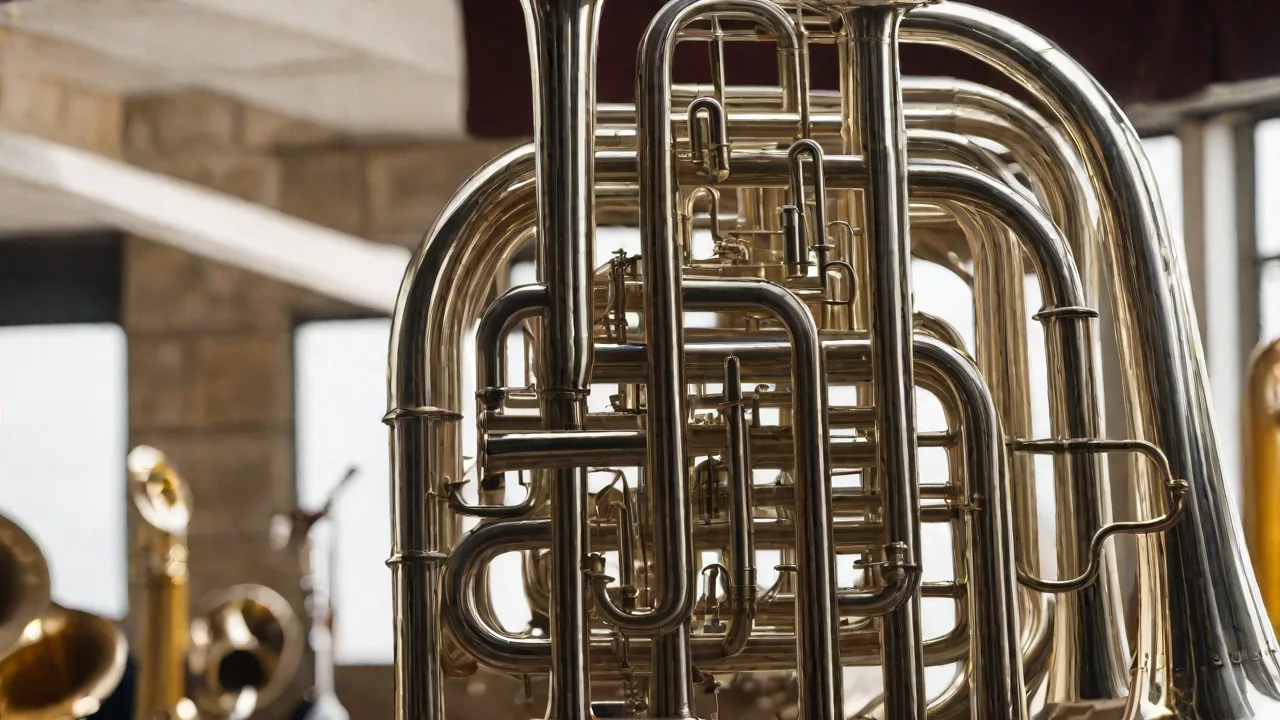
Building a Tuba Collection: What to Look For
The Foundations of Tuba Classification
Before assembling a collection, it is essential to understand the distinct tuba families and how they evolved. Each type serves a specific musical role, and knowing these differences will help you select instruments that complement one another.
Contrabass Tubas: The Orchestral Backbone
Contrabass tubas, typically pitched in BB♭ or CC, are the largest and deepest-voiced members of the family. They are standard in symphony orchestras and concert bands, providing the fundamental bass line. BB♭ tubas are especially common in American wind bands and brass bands, while CC tubas are favored in orchestras for their slightly smaller wrap, quicker response, and clearer articulation in the low register. The bore on contrabass tubas is usually very large—0.750 inches or more—producing a broad, dark tone that can fill a hall without forcing.
Bass Tubas: Versatility and Agility
Bass tubas are smaller instruments pitched in E♭ or F. They are prized for their brighter timbre and greater agility in the upper register, making them ideal for solo work, chamber music, and brass band literature. In brass bands, the E♭ tuba is the standard instrument, while orchestras often use F tubas for passages that require lyrical singing quality. The smaller bore and bell of bass tubas give them a more focused sound that blends well with trombones and horns. Many professional tubists own both a contrabass and a bass tuba to cover the full range of repertoire.
Sousaphones and Helicones: Marching and Outdoor Performance
The sousaphone was designed by John Philip Sousa to project sound forward over a marching band. It wraps around the player’s body and typically is pitched in BB♭. The helicon is a predecessor that coils around the player but lacks the forward-projecting bell. Sousaphones are built for durability and portability, often featuring fiberglass or ABS resin bodies that are lighter than brass. Collecting sousaphones can include vintage brass models from makers like Conn and King, which have a warmer tone than modern fiberglass ones. These instruments are essential if your collection aims to cover marching, parade, or Dixieland styles.
Historical and Specialty Tubas
Beyond the standard types, collectors often seek out unusual instruments such as Cimbasso (a valved contrabass trombone sometimes played by tubists), Wagner tubas (though technically a horn variant, often grouped with low brass), and early 20th-century models with unique valve configurations. Tubas from the early 1900s sometimes feature bottom-action valves or Berlin piston valves that provide a different feel and collectible value. Including a rare or vintage horn adds historical depth and can be a conversation piece in any collection.
Evaluating Key Specifications for Collectors
A thoughtful collector must look beyond the brand name. The interaction of pitch, bore size, valve type, materials, and ergonomics determines an instrument’s playability and character.
Pitch and Key: Matching Repertoire
Owning tubas in multiple keys lets you play literature originally written for that specific instrument. For example, many orchestral works are scored for CC tuba, while some German repertoire demands F tuba. American brass band music is almost always written for BB♭. An E♭ tuba is essential for British-style brass bands. A balanced collection should include at least one instrument in BB♭, one in CC, and one in F or E♭. Some collectors also acquire a G tuba (rarely used today) or a small F tuba with a compact wrap for high-register solos.
Bore Size and Bell Diameter: Tonal Shaping
Bore size directly affects resistance and airflow. A large bore (0.750–0.770 inches) allows massive airflow and a dark, spread tone but requires strong breath support. A medium bore (0.700–0.730 inches) offers a balance of depth and response, common on many professional CC tubas. Small bore (0.650–0.690 inches) is typical of E♭ and F tubas, providing a more focused, agile sound. Bell diameter also matters: bells from 16 to 20 inches produce different projection and colour. Collecting tubas with varied bore and bell sizes gives you a versatile palette of sounds for recording, solo, and ensemble work.
Valve Configuration and Type
Tubas come with three to six valves. Standard four-valve instruments are adequate for most playing, but five or six valves improve intonation in the low register and allow alternate fingerings for tricky passages. Valve type is a major preference point:
Rotary valves (common on German and European instruments like Miraphone and Meinl Weston) are quiet, durable, and have a smooth action.
Piston valves (common on American tubas like Conn and King) offer a faster, more direct push and are easier to maintain for some players. Some modern tubas use perinet pistons (similar to trumpet valves) or top-action pistons. Collectors often acquire both rotary and piston models to experience different tactile feels and tonal nuances.
Materials and Finish
The bell and body material dramatically affect tone. Yellow brass (70% copper, 30% zinc) is the most common, offering a balanced, warm sound. Gold brass (85% copper) produces a darker, richer tone with more projection. Rose brass (90% copper) yields a sweet, mellow sound. Sterling silver bells (92.5% silver) are found on some high-end tubas, providing a brilliant, focused timbre and excellent projection. Lacquer finishes protect the brass and can slightly warm the tone, while silver plating gives a bright, resonant quality. Vintage instruments with worn lacquer or patina can have a distinctive character. When building a collection, consider adding a silver-plated concert tuba and a gold brass solo instrument for contrast.
Weight, Balance, and Ergonomics
Tubas are physically demanding instruments. The overall weight (typically 15–30 pounds) and the distribution of that weight are critical for long practice sessions and performances. Front-action tubas (valves on the front) are easier to reach than traditional side-action designs. Adjustable hand rests, finger hooks, and leadpipes can improve comfort. Sousaphones require a well-padded neckrest and shoulder brace. For a collection that includes elderly players or smaller individuals, seek out lighter models like the modern Yamaha YBB-641 or vintage King 2341.
Brands and Craftsmanship
Established manufacturers have consistent quality. Top-tier brands include Miraphone (Germany), known for rotary valve CC and F tubas; Meinl Weston (Germany), respected for large-diameter designs; B&S (Germany), maker of the PT series; Yamaha (Japan), offering precise intonation; Conn (USA), famous for vintage 20J and 5J sousaphones; King (USA), with many orchestral and sousaphone models; and Holton (USA), valued by collectors for early 20th-century instruments. Custom makers like Thein and Hirsbrunner produce high-end pieces sought by professionals. Researching brand reputation and serial number dating helps assess an instrument’s provenance and value.
Strategies for Curating a Versatile Collection
A collection that covers a range of musical eras, styles, and uses will be more rewarding and useful than a group of similar instruments.
Start with a Workhorse Instrument
Your first tuba should be a reliable, playable model that you can use for daily practice and performances. A used professional BB♭ or CC tuba from a top brand (e.g., a Yamaha YBB-321, Conn 5J, or Meinl Weston 20) is a good starting point. Ensure it is in good mechanical condition, with airtight valves and no major dents affecting sound. This core instrument will serve as a reference point for evaluating future additions.
Incorporate Specialty Tubas for Range and Style
After establishing a workhorse, add instruments that fill specific niches:
- A concert CC tuba for orchestral repertoire and low-register clarity.
- An F tuba for solo literature, chamber music, and high-register ornaments.
- An E♭ tuba if you play in a brass band or want a brighter tone for jazz.
- A sousaphone for outdoor gigs, marching, or New Orleans-style music.
- A vintage BB♭ tuba from the 1920s–1950s for its unique patina and simpler, darker sound.
Collect Vintage and Historical Models
Vintage tubas from the early 20th century often have thinner brass, smaller bores, and softer blow than modern instruments. They can be excellent for recording or orchestral playing where a less aggressive sound is desired. Look for instruments with original lacquer or silver plate, intact engravings, and evidence of quality craftsmanship. Brands like Buescher, C.G. Conn, Martin, and J.W. York & Sons made tubas that are highly collectible today. Be aware that vintage models may need restoration—valve reconditioning, dent removal, or relacquering—which can be expensive but adds to the instrument’s story.
Experiment with Materials and Construction
Some modern tubas use carbon fiber or fiberglass bodies for extreme lightness (often sousaphones). These are practical for travel but alter the sound. Collectors may also seek tubas with hand-hammered bells for a more complex overtone spectrum, or rose brass for a warmer timbre. Including a tuba with a gold brass bell and one with a sterling silver bell gives you direct tonal options for different musical contexts.
Budget, Appraisal, and Insurance
Building a collection requires financial planning. Tuba prices range from a few hundred dollars for student models to tens of thousands for professional custom instruments. Get any used tuba appraised by a reputable technician or dealer before purchasing. Document serial numbers, original cases, and provenance. For a collection valued over a few thousand dollars, consider a dedicated musical instrument insurance policy that covers theft, damage, and loss during transit. Many policies require periodic appraisals and photographs.
Long-Term Care and Preservation
Proper maintenance preserves sound quality, playability, and resale value. A collection of multiple tubas requires systematic care routines.
Cleaning and Lubrication
After each use, wipe the exterior with a soft cloth to remove moisture and fingerprints. Clean mouthpieces weekly with warm soapy water and a brush. Valve oil should be applied every few playing sessions; use high-quality oils designed for the valve type (rotary or piston). Slide grease on tuning slides prevents sticking. For instruments that are not played regularly, still oil valves every three months to prevent corrosion.
Climate Control and Storage
Extremes in temperature and humidity cause metal expansion, contraction, and finish damage. Store tubas in a room with stable humidity (40–60%) and temperature (65–75°F). Use instrument cases when not in use—hard cases with fitted interiors offer the best protection. Avoid storing tubas in basements, attics, or near vents. For vintage instruments with fragile lacquer, consider using a climate-controlled storage cabinet or adding silica gel packets inside the case to control moisture.
Periodic Professional Service
Schedule annual inspections with a brass technician who specializes in tubas. They can check for:
- Valve compression and alignment
- Water key seals
- Solder joint integrity
- Dents and dings that affect airflow
- Lacquer or silver plate wear
Professional cleaning (ultrasonic or chemical) every few years removes deposits that affect tone. If you acquire a vintage instrument, a full restoration may be necessary to bring it back to playing condition—factor this cost into your purchase decision.
Documentation and Provenance
Keep a file for each instrument: serial number, manufacturer, year (if known), previous owners, repairs, and any notable performances. Photographs of the instrument in its original state are valuable for insurance claims or future sales. This documentation adds to the historical value of your collection and can be shared with other enthusiasts.
Sourcing and Networking
Finding quality tubas requires research and connections. The best acquisitions often come from reliable sources.
Reputable Dealers and Auctions
Specialty brass dealers such as Dillon Music (New Jersey, USA), The Brass Exchange (online), Pope Instrument Repair (Texas), and Thomann (Germany) offer curated selections. Many also provide trial periods and warranties. Auctions at eBay, Reverb, and estate sales can yield bargains but require careful inspection—always request detailed photos and ask about playability. Orchestral surplus sales sometimes release well-maintained instruments from professional ensembles.
Tuba Enthusiast Communities
Join the International Tuba-Euphonium Association (ITEA) (iteaonline.org) for networking, classified ads, and conventions. Online forums like Tubenet and the Tuba-Euphonium Forum on Facebook allow you to connect with collectors, ask for advice, and find instruments for sale. Attending conferences or regional workshops gives you a chance to try dozens of instruments before buying.
Dealer Recommendations
For finding high-end tubas, visit Baltimore Brass Co. (baltimorebrass.com) and Dillon Music (dillonmusic.com)—both have extensive inventory and knowledgeable staff. For maintenance supplies, Horn Guys (hornguys.com) offers specialized oils and cases. Always check TubaNews (tubanews.com) for classifieds and reviews.
Conclusion
Building a tuba collection is a long-term commitment that blends musical artistry with historical appreciation. By understanding the different types of tubas, evaluating key specifications like pitch, bore, valves, and materials, and curating a diverse set of instruments that serve different musical roles, you create a resource that deepens your own playing and offers joy to anyone who hears or tries them. Proper care and sourcing through reputable channels ensure your collection retains its value and remains playable for decades. Whether you pursue rare vintage horns or modern concert instruments, each tuba in your collection tells a story of craftsmanship and sound. Start with a solid workhorse, expand with purpose, and let your passion for low brass guide every acquisition.